


Does Owning a Gun Make You Safer? Why Firearms Training Matters More Than Firearms Ownership

The Dangerous Myth of Gun Ownership and Personal Safety
Many people believe that simply owning a firearm makes them safer. They purchase a handgun for home defense or begin carrying a concealed firearm and immediately feel more secure. To them, the gun itself becomes the safety plan.
Unfortunately, reality is far more complicated.
A firearm can be an effective self-defense tool when used correctly, but it is not a magic talisman that automatically protects its owner from harm. Owning a gun without proper firearms training can create a dangerous false sense of security. Many gun owners assume that because they possess a firearm, they are prepared to defend themselves. In reality, possession and preparedness are not the same thing.
After more than 55 years of firearms experience, I've observed one consistent and dangerous trend: most gun owners dramatically overestimate their ability to perform under the extreme stress of a life-threatening encounter.
When violence occurs, many untrained individuals hesitate, freeze, or make poor decisions. In those critical moments, the firearm can become a liability rather than an asset. In some cases, attackers disarm victims and use the weapon against them.
Confidence backed by professional training is valuable. Confidence without training is a dangerous illusion.

Hollywood Has Created Unrealistic Expectations
For decades, movies and television have portrayed gunfights in ways that bear little resemblance to reality.
In Hollywood:
The hero immediately recognizes the threat.
He draws lightning-fast.
Every shot hits its target.
The bad guys fall instantly.
There are no legal consequences.
The hero walks away unharmed.
Real-world defensive shootings are nothing like this.
Actual violent encounters are chaotic, fast-moving, confusing, and terrifying. They often occur at extremely close distances, giving victims only seconds—or fractions of a second—to react.
In reality:
People miss.
People hesitate.
People make mistakes.
Innocent bystanders may be present.
Threats move unpredictably.
Visibility is often poor.
Adrenaline affects performance.
Violence is not choreographed. There are no second takes.
This gap between Hollywood fantasy and reality is one of the strongest arguments for professional firearms training.
What Happens to Your Body During a Deadly Threat?
One of the biggest eye-openers for students attending defensive firearms courses is learning how the body reacts under extreme stress. When faced with a life-threatening situation, your brain activates the survival response. Adrenaline floods the body, triggering physiological changes that can dramatically impact performance.]
Common stress responses include:
Elevated heart rate
Tunnel vision
Reduced peripheral awareness
Loss of fine motor skills
Auditory exclusion
Time distortion
Memory gaps
Tasks that seem easy during practice can suddenly become difficult:
Drawing a firearm
Operating safeties
Reloading
Clearing malfunctions
Communicating effectively
This is why quality self-defense training emphasizes repetition and consistency. The goal is to build skills that remain functional under pressure. The untrained gun owner assumes they will perform as they do on the range. The trained shooter understands that stress changes everything.
Owning a Firearm Is Not the Same as Being Proficient
Buying a firearm does not automatically make someone capable of defending themselves.
Owning a piano doesn't make someone a musician.
Owning a race car doesn't make someone a professional driver.
Likewise, owning a firearm doesn't make someone prepared for a violent encounter.
Effective self-defense requires education, practice, and ongoing training.
Many people buy a handgun, fire a few boxes of ammunition, and assume they're ready. What they often fail to realize is that defensive firearm use involves much more than hitting a stationary target.
A competent armed citizen must understand:
Firearm safety
Marksmanship fundamentals
Threat assessment
Target identification
Weapon retention
Movement techniques
Communication under stress
Use-of-force laws
Post-incident procedures
These skills do not develop automatically. They must be learned and practiced.
The Myth of "I'll Rise to the Occasion"
One of the most dangerous beliefs among untrained gun owners is the idea that they will somehow perform exceptionally well when faced with danger.
Many people tell themselves:
"When the time comes, I'll do what needs to be done."
Human performance research consistently shows otherwise.
People rarely rise to the level of their expectations.
They typically fall to the level of their training.
Military personnel, law enforcement officers, pilots, emergency medical professionals, and other high-risk professionals all understand this principle.
Under stress, people rely on habits and skills they have practiced repeatedly.
Without proper training:
Drawing from concealment becomes difficult.
Movement may stop entirely.
Decision-making slows dramatically.
Hesitation becomes more likely.
Hope is not preparation.
Confidence is not competence.
Training bridges the gap.
Why Range Practice Isn't Enough
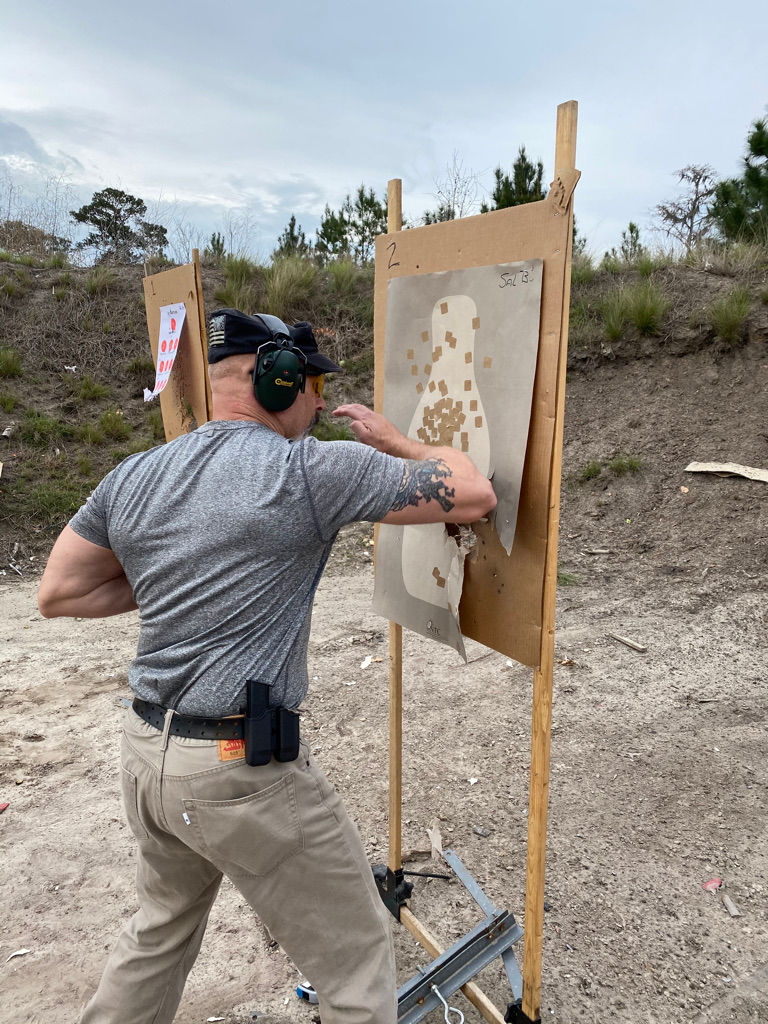
Many gun owners judge their preparedness based solely on their performance during casual target practice. While range time is important, it does not fully prepare someone for a real defensive encounter.
At most shooting ranges:
Targets don't move.
Lighting is controlled.
Nobody is threatening your life.
You know when shooting begins.
You can shoot at your own pace.
Real-life violence is completely different.
The threat may be moving.
You may be moving.
Your loved ones may be nearby.
Your heart rate may exceed 170 beats per minute.
Your hands may be shaking.
Under those conditions, shooting accurately becomes significantly more difficult.
This is why realistic defensive firearms training is essential.
Every Bullet Carries Responsibility
One of the most overlooked realities of self-defense is that every round fired has a destination. Even highly trained shooters miss under stress.
When a bullet misses its intended target, it continues traveling until it strikes something.
That "something" could be:
A wall
A vehicle
A neighboring home
An innocent bystander
You are legally and morally responsible for every round you fire.
The right to use deadly force in self-defense does not include the right to injure innocent people. Professional firearms training improves accuracy, judgment, and decision-making—helping reduce unnecessary risks.
Effective Home Defense Requires More Than a Gun
Many homeowners purchase a firearm for protection and stop there.
However, a firearm alone is not a complete home defense plan.
Every homeowner should consider:
Where family members will go during an emergency
Safe room locations
Communication plans
Safe fields of fire
Child access prevention
How responding officers will identify you
Without planning, confusion can quickly overwhelm even the best intentions.
Preparation before an emergency is far more effective than trying to solve problems during one.
Situational Awareness: Your Most Important Self-Defense Skill
Experienced instructors understand a simple truth:
The best gunfight is the one that never happens.
Popular culture glorifies confrontation.
Professional self-defense training emphasizes avoidance.
Situational awareness, threat recognition, de-escalation, and sound judgment prevent more violence than firearms ever will.
True self-defense begins long before a firearm enters the equation.
It starts with:
Paying attention to your surroundings
Identifying threats early
Avoiding unnecessary risks
Leaving dangerous situations before they escalate
These skills save lives every day.
Understanding the Legal Consequences of Self-Defense
Many gun owners spend significant time learning how to shoot but very little time learning when they may legally shoot.
This imbalance can create serious problems.
Even a justified self-defense shooting can result in:
Police investigations
Criminal inquiries
Civil lawsuits
Significant legal expenses
Public scrutiny
Emotional trauma
Understanding self-defense law is every bit as important as understanding marksmanship.
Professional training should include education on:
Use-of-force laws
Deadly force justification
Reasonableness standards
Interacting with responding officers
Post-incident conduct
Knowledge of the law can be just as important as skill with the firearm itself.
Responsible Gun Ownership Requires Continuous Training
Another common misconception is that firearms training is a one-time event.
It's not.
Skills deteriorate without practice.
Pilots train continuously.
Law enforcement officers train continuously.
Military personnel train continuously.
Athletes train continuously.
Firearms skills are no different.
Regular training reinforces:
Accuracy under pressure
Weapon manipulation
Decision-making
Performance under pressure
The goal is not perfection.
The goal is preparedness.
A Firearm Is Only One Part of a Personal Safety Plan
A firearm is simply a tool.
Its effectiveness depends entirely on the knowledge, judgment, discipline, and skill of the person using it. An untrained gun owner may gain little real protection from firearm ownership alone. A trained gun owner gains the ability to use that tool safely, legally, and effectively
Personal safety requires:
Situational awareness
Threat avoidance
Planning
Communication
Legal knowledge
Emotional control
Defensive skills
Firearms proficiency
The firearm is only one piece of the puzzle.
Final Thoughts: Training Saves Lives
Owning a gun does not automatically make you safer.
Training does.
Preparation does.
Judgment does.
Responsibility does.
The belief that a firearm alone provides security remains one of the most persistent myths in modern self-defense culture. Real-world violence is fast, chaotic, stressful, and unforgiving. The skills necessary to survive such encounters cannot be learned from movies, television, social media videos, or wishful thinking. They require professional instruction, regular practice, and ongoing commitment. Responsible gun ownership is not the end of the journey—it is the beginning of a serious responsibility.
The question isn't whether you own a firearm.
The question is whether you've invested the time and effort necessary to use it safely, legally, and effectively if the worst day of your life ever arrives.
Because when that moment comes, the firearm itself will not save you.
Your training might.
Train With Emmaus Defense LLC
At Emmaus Defense LLC in Savannah, Georgia, we provide comprehensive self-defense and firearms training designed to prepare students for real-world situations.
Our programs include:
Situational awareness training
Threat assessment and avoidance
Self-defense law education
Empty-hand defensive techniques
Weapon retention skills
Firearms safety
Marksmanship training
Defensive shooting techniques
Advanced tactical firearms instruction
Whether you're a new gun owner or an experienced shooter looking to sharpen your skills, our goal is to help you become a safer, more capable, and more responsible armed citizen.
Visit our website to view upcoming classes, read reviews, and reserve your training spot today.
Grant & Louisa Cate Emmaus Defense LLC


Comments